
WHICH tooth stain ARE YOU?
Updated: Feb 7
We live in a world where the color of our teeth can shape first impressions. Why? Becaus a smile is one of the first things we notice about each other.
You know that dazzling Hollywood smile we see in the media—the so-called “standard of beauty”? Here’s a secret you might already suspect: that paper-white shade on your favorite celebrities isn’t natural. But every person’s teeth have their own natural shade, and it varies from one individual to another.
Let’s start with the basics before we uncover tooth stains.
Teeth are composed of three layers :

Layer 1 - ENAMEL - the outermost white layer we all see that acts like a shield.
Enamel is porous, much like a sponge. It absorbs substances. This part of the tooth collects surface stains, also known as extrinsic stains, from substances such as coffee, tea, etc.
Layer 2 - DENTIN - the middle layer that acts like a tunnel, and has a natural yellowish shade.
Dentin, more porous than enamel, is where natural tooth shade lies. Deeply embedded surface stains can sit here, affecting the tooth’s natural shade. This is also the location for intrinsic stain (stain formed inside the tooth during development or as a result of tooth trauma).
Layer 3 - PULP - the innermost area that keeps your teeth alive and houses the nerves and blood vessels.
Nonetheless, teeth do stain, and their natural shade is often hidden by unwelcome stains that attack our confidence in social settings.
The good news.
There’s a solution that can bring your smile back to its natural glow and uplift your confidence. However, before we explore solutions, it’s important to identify the type of tooth stain you have.
THE YELLOW TOOTH STAIN
The most common surface stain we see on ourselves or others. Ranging from mild yellow to a deep yellow-brown, this stain is built up over time from consuming intensely coloured foods and beverages like:
berries
soy sauce
curries
red wine
coffee
tea

Acidic foods and beverages can also be a culprit. They erode our enamel, making it more porous, and exposing the underlying yellowish layer of dentin. This could be:
wine
tomato sauce
balsamic vinegar
citrus fruits
sodas

To add the cherry on top, pair this with poor oral hygiene, and you have plaque essentially acting as glue, allowing stains to adhere to your teeth more easily. Aging can calso be a result of yellow stains.

This is where teeth whitening comes in. Teeth whitening, whether done professionally or with over-the-counter products, can help with lifting stains and restore your smile to it's natural tooth shade.
THE BROWN TOOTH STAIN
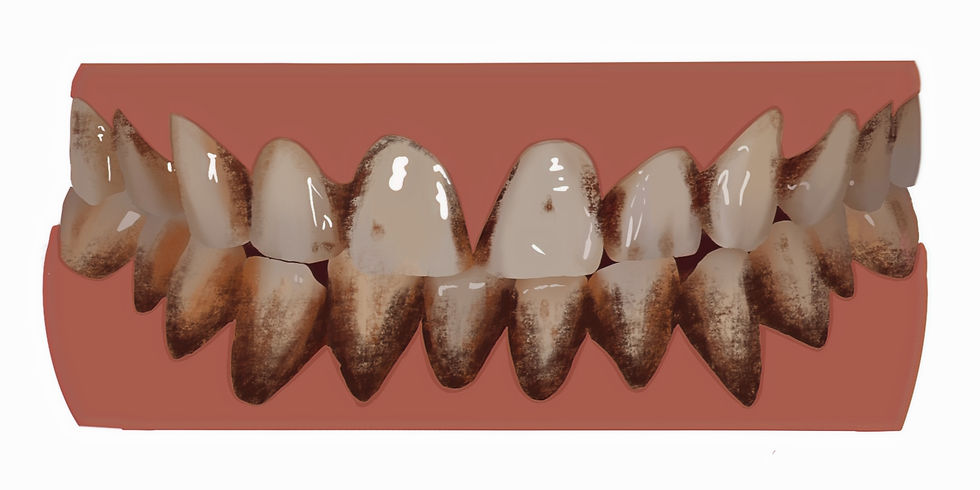
Brown stains are often a result of smoking or tobacco use. These stains are caused by tar and nicotine in tobacco, which penetrate the enamel and can deepen over time. Teeth can present with lightly diffuse brown stains or concentrated dark brown stains.
Fortunately, these surface stains can be removed with a prophy polish by a dental professional and can be further enhanced using teeth whitening products or services.
Sometimes small pitted brown stains can also indicate decay (cavity); in this case, see your dentist for a diagnosis.

THE GREY TOOTH STAIN
When it comes to grey stains, I’d like to change the term to discolouration. Why? Grey stains are intrinsic, meaning they’re inside the tooth, not on the outer surface. This discolouration could be the result of a dead tooth, often caused by tooth trauma or injury, in which the nerve inside the tooth has died.

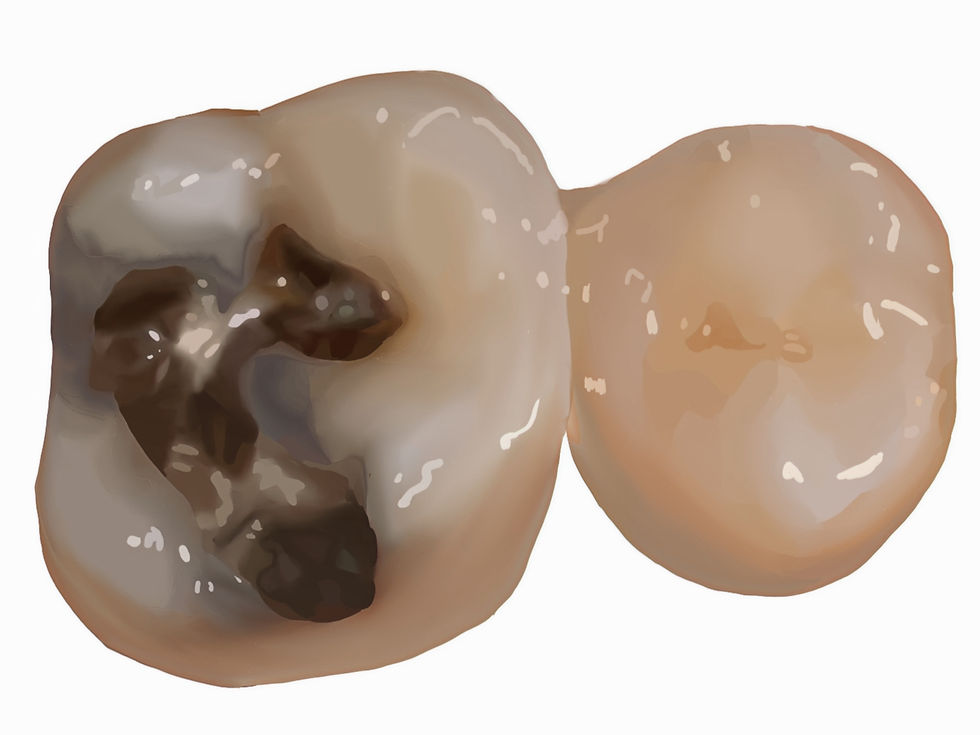
Other causes for a grey tooth could be medications, thinning enamel, genetic predisposition, or staining from silver fillings (amalgam) which usually have a greyish blue hue.

Teeth whitening may help certain grey tooth discolourations, but multiple sessions may be required to achieve the desired results, and all results vary. Your dentist can offer cosmetic solutions like veneers, crowns and internal bleaching.
THE BLACK TOOTH STAIN
When you see this colour, it's best to visit your dentist as this stain usually indicates an active and severe cavity (decay) on the tooth. In this case, a filling or other alternative dental treatments will be required.

If the stain is fairly smooth and not cavitated, it could indicate heavy tobacco staining, which can be removed with a dental cleaning.
THE WHITE TOOTH STAIN
White stains often appear as flecks on the tooth surface and are intrinsic (meaning inside the tooth).

One reason for this stain is due to the loss of minerals in the enamel. At times, this can be seen after completing braces treatment, or indicate an early start to a cavity.
Another reason could be fluorosis. If you were that child who endlessly swallowed fluoridated toothpaste, this stain might be you. It's the result of excessive fluoride intake during childhood, affecting the development of the adult tooth, strictly cosmetic.
Fluorosis staining can range from white flecks (mild cases) to brown and pitted (rare and severe cases).


Because white stains are inside the tooth, in some mild cases, teeth whitening may be a budget-friendly option to help even out your tooth shade for a balanced white smile. However, for permanent cosmetic treatment options, visiting your dentist is a good idea.
THE PURPLE TOOTH STAIN
Calling all red wine lovers!. This stain is associated with red wine consumption and can vary in intensity. This surface stain can appear as a dark purple to reddish discolouration.

Does that mean you have to stop drinking your favourite Cabernet Sauvignon? Not a chance.
Some ways to reduce staining are practicing good oral hygiene habits and rinsing between sips or after drinking. For intense staining, all is not lost; try professional whitening or over-the-counter whitening products.
THE TETRACYCLINE TOOTH STAIN
I had to give this stain its own category because of its diversity in colour.
Tetracycline staining is caused by the medication tetracycline, which was either given to a pregnant mother, affecting the fetus, or given to children up to age 8.
The tooth discolouration can range from yellow to brown to gray and sometimes bluish gray, depending on dose, duration of exposure and the developmental stage of the tooth.

Tetracycline stains are permanent as they are inside the tooth. Teeth whitening isn’t always effective; however, in very mild cases, it may help, but multiple sessions are often needed to see the desired results. A dentist can offer cosmetic options such as veneers or crowns to give you the smile you deserve.
THE AMELOGENESIS IMPERFECTA STAIN
Lastly, amelogenesis imperfecta is a genetic disorder affecting tooth enamel development.
The appearance of the discolouration can range from yellow, brown or gray as a result of the defective enamel.

Because these teeth are thinner, porous, and softer than normal, and often rougher due to pits and grooves, they are prone to staining from food and beverage consumption.
As an intrinsic stain (inside the tooth), your dentist could offer treatment options such as bonding, veneers and crowns for the best outcomes in tooth preservation and appearance.
Final Words...
Teeth whitening is a great option for extrinsic (surface) stains like yellow stains, smoking stains and red wine stains. Additionally, it's a budget-friendly option to help brighten or even out white spot stains and certain grey teeth discolourations.
At 32DIAMONDS specialize in professional teeth whitening, performed by a dental professional. We help remove those stubborn stains quicker than many alternative methods, and get you smiling confidently again.
For intrinsic stains like decayed black stains, advanced fluorosis, tetracycline stain and amelogenesis imperfecta stains, cosmetic treatments like crowns and veneers by a dentist are the ideal solutions.
Finally I want to say Congrats! If you’ve discovered which tooth stain you have, you’re on the right track towards a smile you can feel confident in again.
Comments